Postgraduate Certificate in Ocean Bathymetry at the University of New Hampshire, USA (2024-2025)
The Nippon Foundation of Japan has provided funding for GEBCO to train a new generation of scientists and hydrographers in ocean bathymetry. The 12-month course, leading to a Postgraduate Certificate in Ocean Bathymetry (PCOB), has been held at the University of New Hampshire, USA since 2004.
The application process for entry onto the course in 2024 is now closed.
The 21st course will begin in late August 2024 (pending funding to be confirmed end March by the Nippon Foundation).
Further details about the course are available below.
- Introductory statement and description
- Eligibility and application process
- Finances and fees
- Location of the course
- Dates of the course
- Course content
- Final assessment
- Further information
1. Introductory statement and description
The General Bathymetric Chart of the Oceans (GEBCO) has been funded by the Nippon Foundation, based in Tokyo, Japan, to carry out the training of ocean mappers. GEBCO has formal links to the scientific and hydrographic communities through the Intergovernmental Oceanographic Commission (IOC) of UNESCO and the International Hydrographic Organization (IHO).
GEBCO produces a range of bathymetric data sets and products. This includes global gridded bathymetric data sets a global set of digital bathymetric contours; the GEBCO Gazetteer of Undersea Feature Names; the GEBCO Digital Atlas; the GEBCO world map and the IHO-IOC GEBCO Cook Book — a reference manual on how to build bathymetric grids.
Bathymetry contributes substantially to solving societal problems. For example, the demand for accurate and up-to-date bathymetric charts and gridded data sets is increasing in the fields of oceanographic modelling to predict ocean circulation and its impact on climate, modelling that predicts tides and tsunami propagation, evaluating fisheries resources and habitats, assessing the impact of coastal sediment transport and pollution, geological modelling of ocean basin evolution, delineating the limits of the Continental Shelf (UNCLOS) and assisting the International Seabed Authority to manage the oceans. GEBCO charts are routinely used as base maps in every day planning on a regional scale and, often on a global scale, as wall charts wherever marine scientists gather to discuss their work.
GEBCO consists of a network of volunteering scientists, hydrographers and engineers who freely contribute their time, effort, knowledge and skill. GEBCO is run by a Guiding Committee and underpinned by three main Sub-Committees and several specialist Working Groups that meet at least annually. In addition, the US NOAA operates a digital bathymetric data center in Boulder, Colorado, USA, which archives ocean bathymetric sounding data.
In 2017, Seabed 2030, a collaborative project between GEBCO and the Nippon Foundation was launched. Its aim is to facilitate the complete mapping of the global ocean floor by the year 2030.
In order to broaden the GEBCO community and to encourage more younger scientists and hydrographers to become involved in mapping the ocean floor, GEBCO and the Nippon Foundation established the Postgraduate Certificate in Ocean Bathymetry (PCOB) at the University of New Hampshire (UNH), USA. Students who have completed the course have returned to their home organisations where they apply the skills and knowledge they acquired on the course to build capacity within their own country.
Find out more from Training Program pages at the Center for Coastal and Ocean Mapping (CCOM) at the University of New Hampshire.
2. Eligibility and application process
Students for the PCOB will be selected by a competitive application process. Minimum qualifications for acceptance are a four- year undergraduate degree in a related science or engineering discipline and proof of ability to successfully complete graduate level courses conducted in English. Potential applicants are advised that the candidates selected for previous years' programs have possessed more than these minimum qualifications. Applicants are also advised that the intense coursework requires ease and fluidity in written and spoken English. The selection process will aim at choosing candidates from a wide geographic distribution of coastal countries.
From the applications, a selection committee will establish a short list of the most suitable applicants, who will be interviewed by Skype or similar software. Based on the interviews, some candidates' home organisations will be asked about their future participation in GEBCO and deep ocean bathymetry. Based on their qualifications expressed in the application, the interviews and the support of their home organisation, six students will be selected to enroll in the Graduate Certificate Program at the University of New Hampshire's Center for Coastal and Ocean Mapping/Joint Hydrographic Center (CCOM/JHC) in Durham, New Hampshire, USA. The selected students must meet the minimum international entry requirements established by the Graduate School of the University of New Hampshire.
The Course Director and the University of New Hampshire's Office of International Students and Scholars will help the selected students through all immigration and application processes. All fees associated with the application process (for the student) will be covered by the Training Program.
Housing. Graduate Students normally live on /near campus with accommodation for single students only. Accommodation for married students is not plentiful in the Durham area. Applicants are strongly advised not to bring family with them initially. The cost of housing and subsistence must be paid directly by the student.
3. Finances and fees
Tuition and fees will be paid directly by the Training Program. In addition to the tuition and fees, the Training Program will also provide each selected student with
- An annual stipend of ~US$37,700. "Under review"
- Computer hardware, software and textbooks necessary to complete the course.
- One return airfare for the student to cover travel to UNH from the student's home base at the beginning of the program and back to the student's home base at the end of the program.
- Return airfare and living expenses for the student for one trip to obtain work experience at another institution active in bathymetry (subject to opportunities).
- Return airfare and living expenses for the student to participate in a data collection cruise on a research or survey ship (subject to opportunities).
All other costs must be met by the student.
4. Location of the course
The course will be based in the University of New Hampshire's Center for Coastal and Ocean Mapping/Joint Hydrographic Center (CCOM/JHC) in Durham, New Hampshire, USA.
5. Dates of the course
The course will last 12 months. The 21st course will begin in late August 2024 (pending funding to be confirmed by the end of March 2024 by the Nippon Foundation).
6. Course content
The academic programme consists of core courses, elective courses and projects. Students must take all core courses. Students may take more than one elective, with permission.
Throughout the year, visiting specialists will provide lectures on Ocean Mapping topics particularly pertinent to GEBCO practitioners. In addition, short training courses in the use of common commercial hydrographic processing packages and other software will be conducted.
In the Fall Semester (September to December) students will take the following:
- OE 874 - Integrated Seabed Mapping Systems (OM 1)
- ESCI 872 - Applied Tools for Ocean Mapping (core)
- OE/ESCI 8xx - Geodesy for Ocean Mapping (new class)
Students may have to take English (depending on level. Assessed individually.)
In the J Term (January)
- ESCI 868 - Applied Physical Oceanography for Ocean Mappers
In the Spring Semester, (January to May) students will take the following:
- ESCI/OE 875 - Advanced Topics in Ocean Mapping (core)
- ESCI 871 - Geodesy and Positioning for Ocean Mapping (core)
- ESCI 896 (04) - Bathymetric Spatial Analysis (core)
- ESCI 869 - Marine Geology & Geophysics for Ocean Mappers (core)
Students will also have to take OE 677 - Seamanship and Marine Weather for Ocean Engineers and Scientists (assessed on individual background by instructor).
Note that each week there is a one hour seminar given by a visitor — these are compulsory for graduate students. Note also that we can put together a special course if there is a need and interest.
Elective courses
Students may be able to take an elective course during the semesters (Assessed individually).
In the Summer
Students will take the Hydrographic Field Course (ESCI 972).
Students may take part in a research cruise and/or undertake a working visit(s) to another research lab(s) – subject to availability over the late summer. These will be selected to complement the individual student’s program and the requirements of their employers.
7. Final assessment
The Course Director will determine whether a student qualifies for the Postgraduate Certificate in Ocean Bathymetry based on grades achieved in course work, examinations and participation in work and at-sea experience programs.
8. Further information
Requests for further information should be sent to the Course Director.
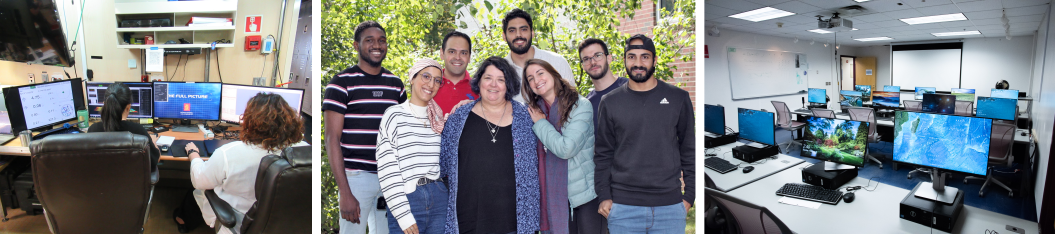 GEBCO has been funded by the Nippon Foundation, based in Tokyo, Japan, to train a new generation of scientists and hydrographers in ocean bathymetry. The twelve-month course, leading to a Postgraduate Certificate in Ocean Bathymetry (PCOB), is held at the University of New Hampshire, USA.